Model B
B uses ten past trajectory observations and frozen Whisper audio features.
01 / Aviation & AI research
My aviation projects.
CURRENT RESEARCH
I study how ATC instructions can help predict aircraft movement.
I use flight data and air traffic control (ATC) audio to predict aircraft motion.
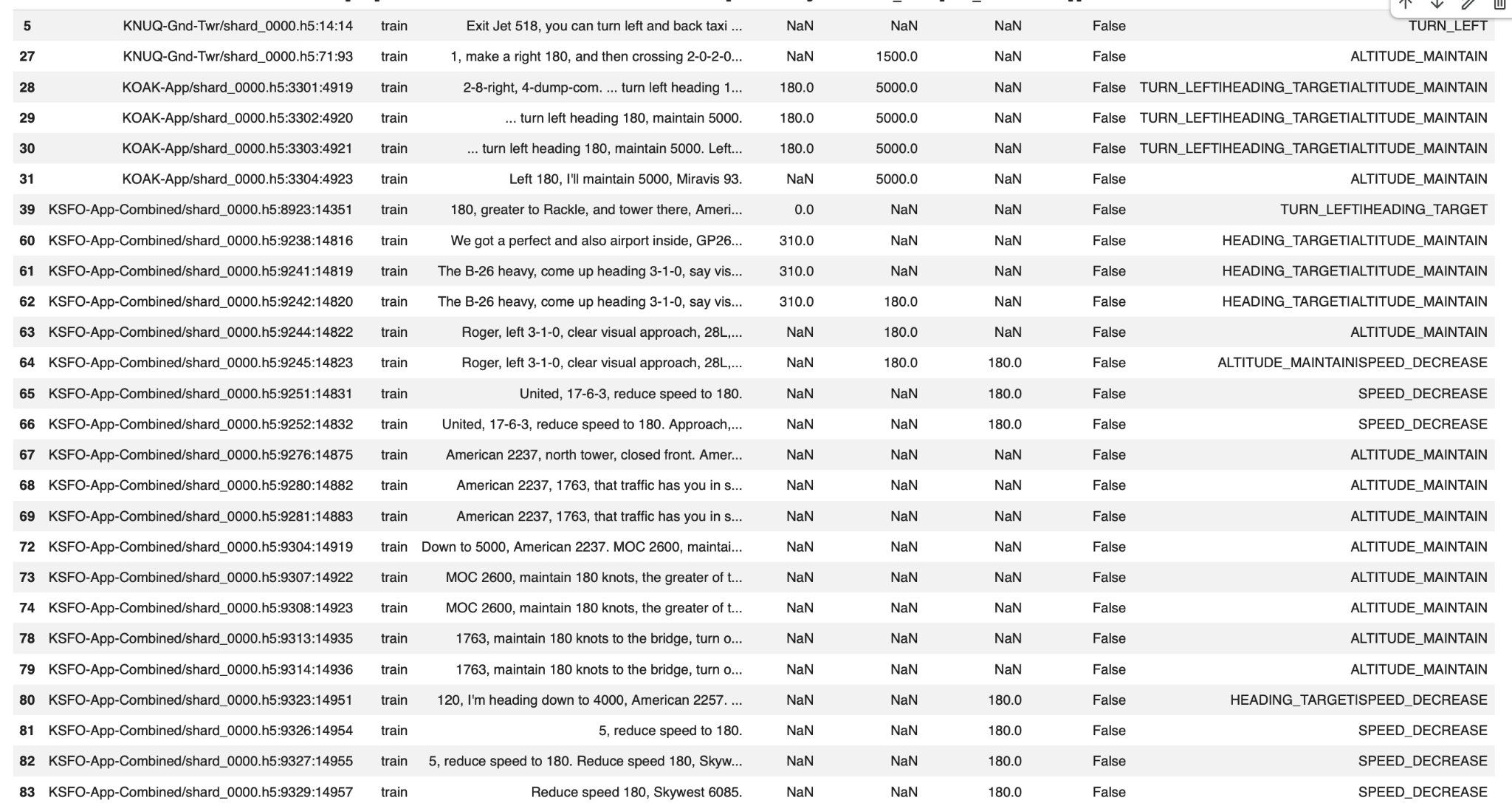
I built a forecasting experiment from the Voice2Traj framework. I reconstructed the trajectory encoder and used Whisper audio features. I then tested semantic command labels from ATC transcripts.
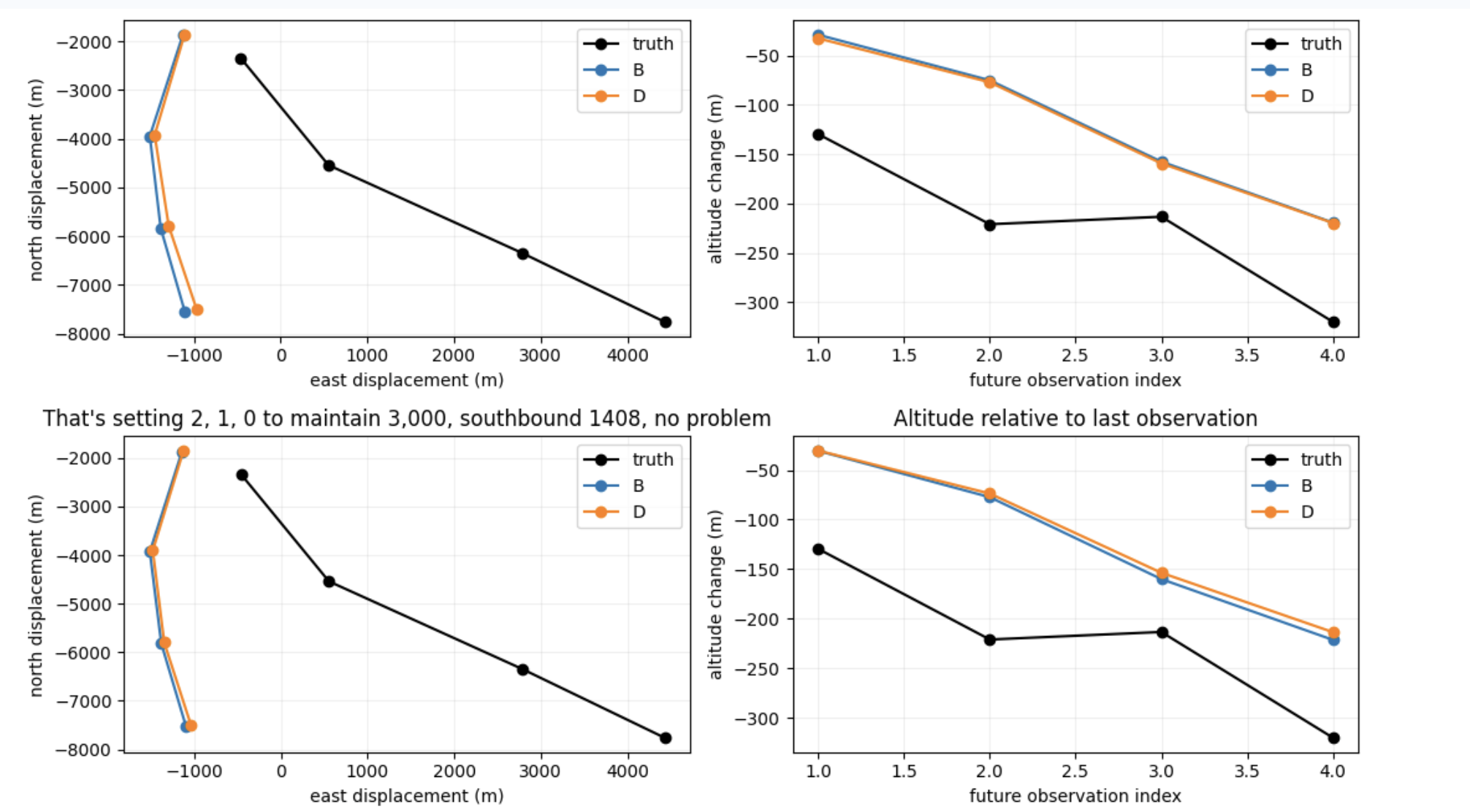
The results show that models B and D already exhibit initial abilities to capture the future movement of the aircraft. I am currently trying to utilize parametric models and better semantic phrasing to improve the prediction results further.
How can ATC instructions improve trajectory prediction?
Reading the experiment
B uses ten past trajectory observations and frozen Whisper audio features.
D uses the same inputs, and it adds transcript-derived command types and numerical targets.
Both models predict four future observations. In the example above, both predict a descent. Their horizontal paths are close to each other. Both paths differ from the recorded path.
Next experiment
I have prepared a new comparison between a smaller B baseline and a parameterized response model. The response model will estimate a delay, a response rate, and a time constant, and it will use these parameters to generate future aircraft motion.
The experiment uses the same validation policy and per-fit time allowance for both models. It includes early stopping and tests with removed or shuffled commands. Delay is measured in observation steps.
Impact
Air traffic controllers need to anticipate aircraft movement, and accurate trajectory predictions could help them identify potential conflicts earlier.
I hope this research can grow into an all-in-one monitoring system for air traffic controllers. It could warn ATCs about potentially unusual aircraft behavior.
This could revolutionize their workflows and help them respond earlier.
My current research grew out of earlier work on aircraft design. I explored aircraft motion by building a tilt-rotor aircraft with my club.
Aircraft project / 2022–2025
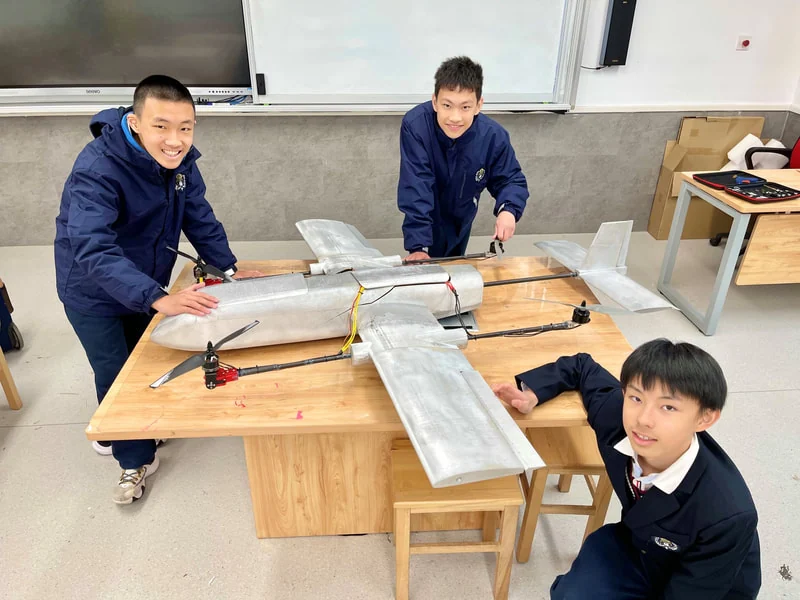
I founded the Advanced Aircraft Club and served as its president. I led a three-person Conrad Challenge team, and we built a 1.6 m tilt-rotor logistics aircraft.
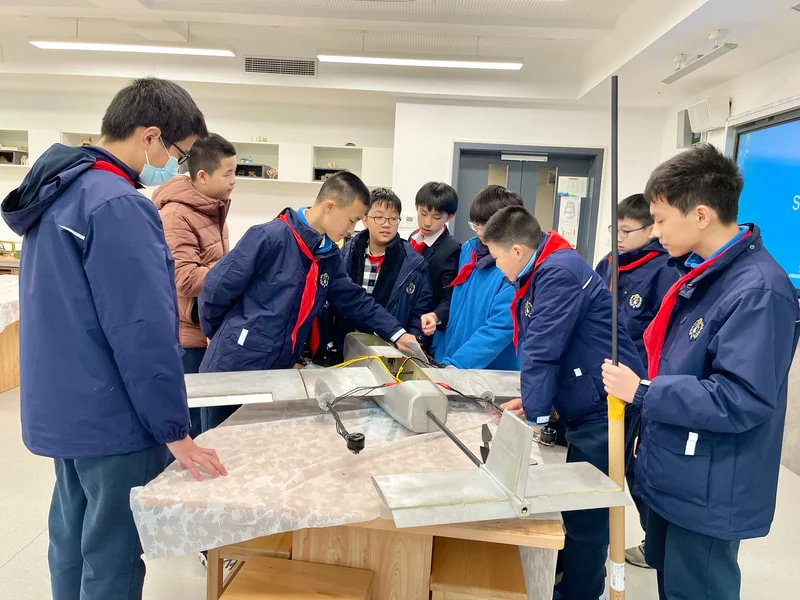
I was responsible for the aircraft design, hardware engineering, and flight control. I used 3D modeling and aerodynamic analysis in the design. I also led weekly club sessions on aerodynamics and design software.
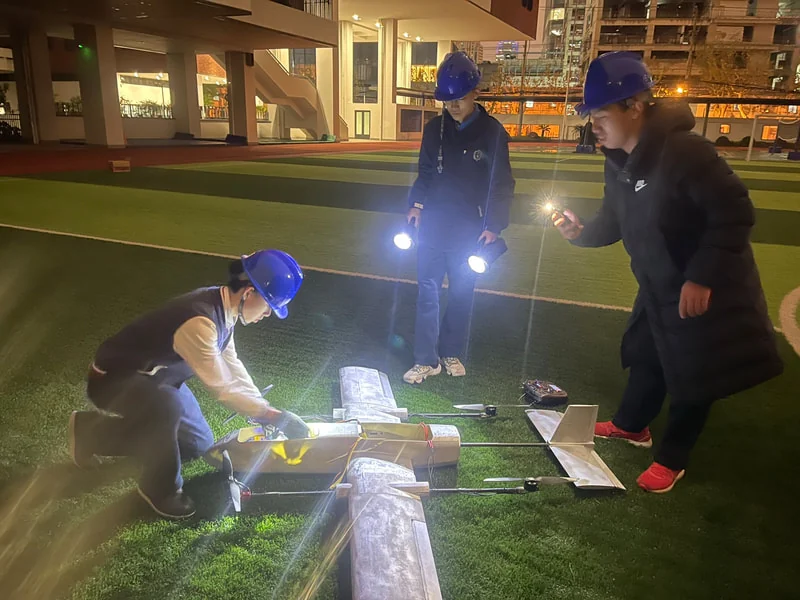
We designed the rotors to tilt for vertical takeoff and forward flight. Our prototype completed a short takeoff and landing test. The team received Conrad Innovator recognition in the 2022–23 Innovation Stage.
This project developed my interest in aircraft motion, and I now study flight trajectory prediction through AI research.